
Hi everyone 🙂
This is something I encounter a lot when managing a team of people with different personalities and reactions to stress.
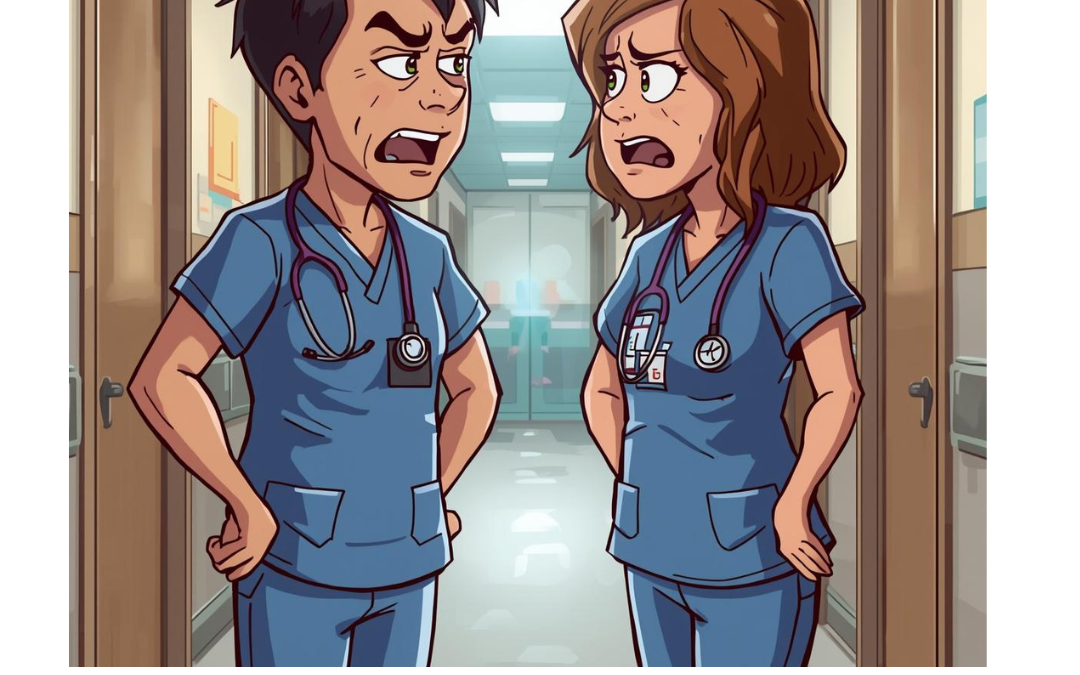
It is an often unspoken but daily reality of healthcare. Difficult colleagues can drain morale, create toxic environments, and, most critically, jeopardize patient safety. This isn’t about office politics; it’s about professional survival and system safety.
The key shift is moving from “How do I deal with this difficult person?” to “How do I professionally manage this counterproductive behaviour to protect patient care and my own well-being?”
Here is a tiered, actionable strategy for navigating colleague conflict.
The D.R.I.F.T. Framework for Professional Conflict Navigation
D – DIAGNOSE the Behavior (Before Reacting)
First, label the behavior specifically, not the person. This depersonalizes it and helps you choose the right tool.
The Bully/Dominator: Intimidating, condescending, dismissive.
The Slacker/Passive Saboteur: Chronically late, cuts corners, “forgets” tasks.
The Martyr/Competitor: “I work harder than everyone,” undermines others’ efforts.
The Gossip/Divider: Creates factions, spreads misinformation.
The Abrasive/Blunt: Technically competent but emotionally destructive.
R – REGULATE Your Response (The 90-Second Pause)
When triggered, your amygdala hijacks your brain. Do not respond in this window.
Internal Script: “This is a behavior, not a personal attack. My response will set the tone. Breathe.”
Physiological Hack: Put your tongue on the roof of your mouth. This literally engages your prefrontal cortex (thinking brain) and disengages the limbic system (reactive brain).
Verbal Stall: “That’s an important point. Let me think about that for a moment.”
I – INITIATE the Conversation (Using the “C.A.R.D.” Approach)
If the behavior is a pattern, a private, professional conversation is required. Frame it around Clinical Care & Context, not character.
C – Context: “Hey, do you have 2 minutes to talk about the handoff from this morning?” (Neutral, specific time/event).
A – Action: Describe the observable behaviour factually, without judgment. “When you said, ‘I don’t have time for this,’ and walked away while I was giving my report…”
R – Result/Risk: State the impact on work/patients. “…it resulted in me missing a key medication time for Mr. Jones, and it breaks our team’s communication protocol.”
D – Desired Change/Do: Propose a future-oriented solution. “In the future, if you’re under pressure, could you give me a ‘one-minute’ signal so we can pause and reconnect when you’re clear?”
F – FORMALIZE & DOCUMENT (When Patterns Persist)
If private conversation fails, you must move from informal to formal.
1. Document Factually: Keep a BRIEF, objective log: “Date/Time: Behavior observed. Patient impact (if any). My action (e.g., ‘I requested clarification’).” No emotions, just facts.
2. Use the Chain: Follow the formal chain of command: Charge Nurse → Manager → Director. Frame it as a patient safety/system issue.
T – TEND to Yourself & Your Tribe
You cannot fix a toxic person, but you can fortify yourself and your supportive colleagues.
Create Micro-Alliances: Build a “wall of sanity” with other respectful colleagues. Use phrases like “I noticed that too. Let’s make sure we always give each other full reports.” Publicly model the good behaviour.
Practice Strategic Detachment: For the chronically toxic, limit interaction to only what is necessary for patient care. Be professionally bland. Do not engage in gossip or drama.
Debrief with a Trusted Mentor: “This is the situation. Am I reading this correctly? What would you do?”
Specialty-Specific Scenarios & Scripts
Scenario 1: The Rude Radiologist (on the phone)
They bark: “Why are you calling me? The report is pending.”
Your Response (Calm, factual): “I’m calling because the ER doc is at the bedside with a deteriorating patient and needs verbal prelims on the CT. The chart number is 12345. What can you tell me about the head scan?”
Why it works: You immediately state the clinical urgency and patient need, not your own. You force the focus back to the medicine.
Scenario 2: The Condescending Nurse (to a new tech)
“Ugh, you still don’t know how to set up a sterile field properly?”
Your Response (Neutral, leveraging team): “I follow the protocol I was taught. If you’re seeing a breach, please point it out specifically so we can fix it together for the patient’s safety.”
Why it works: You cite an objective standard (“protocol”), invite them to be specific (“point it out”), and re-frame it as a shared goal (“for the patient’s safety”).
Scenario 3: The Lazy Partner (who leaves all cleanup for you)
Proactive Script (Next time, at the START of shift): “Hey, to make sure we both get out on time today, let’s agree to alternate cleaning the room between cases. I’ll take the first one. Can you take the second?”
Why it works: You set a clear, fair expectation in advance as a collaboration, not a complaint.
The most powerful phrase in professional conflict is:
“Help me understand…”
“Help me understand your workflow constraints so I can time my requests better.”
“Help me understand what you need from me in a handoff to make it efficient for you.”
This phrase disarms, assumes positive intent (even if absent), and forces collaboration. It often reveals the root cause: they’re overwhelmed, under-trained, or have a bad system.
Now that you are armed with the C.A.R.D framework and the scenarios and scripts I have given you, I hope this helps you to keep conflict to a minimum and nip anything that does surface.
Take care and stay smiling 🙂
Fathima